 |
| The best position in grappling by the best grappler |

Showing posts with label back take. Show all posts
Showing posts with label back take. Show all posts
BJJ / Grappling tips: How to take the back when the opponent turtles


BJJ / Grappling Tips: How to take the back from closed guard
Taking the back from the closed guard is a basic transition that no one in jiujitsu should get to blue belt without learning properly. It features in sports jiujitsu (gi and no gi), MMA and of course when defending yourself against a bigger, stronger aggressor who managed to take you down in an altercation.
Below are three version of how to take the back from the closed guard that I really like:
Getting their arm across your belt line, as demonstrated by Marcus "Buchecha" Almeida:
Below are three version of how to take the back from the closed guard that I really like:
Getting their arm across your belt line, as demonstrated by Marcus "Buchecha" Almeida:
BJJ / Grappling Tips: RNC - Variations on the Rear Naked Choke
The best submission in Brazilian / Gracie jiujitsu, Nogi grappling or MMA is the rear naked choke or Mata Leão (translates to the lion killer). Done well, it is close to impossible to defend or esacpe it. I'm lucky enough to have been taught the details of how to set it up, secure it and finish it by no less than the great Rickson Gracie.
Stephan Kesting I:
 |
| Watching intently as Master Rickson Gracie explains the finer points of the Rear Naked Choke on my friend and instructor Professor David Onuma. |
Some of the best instructionals out there is Stephan Kesting's tutorial below. I've also found a couple of really handy additional tips from both him and Robert Drysdale. I hope you benefit from them.Stephan Kesting I:
BJJ tips: Double guard pull berimbolo armbar triangle
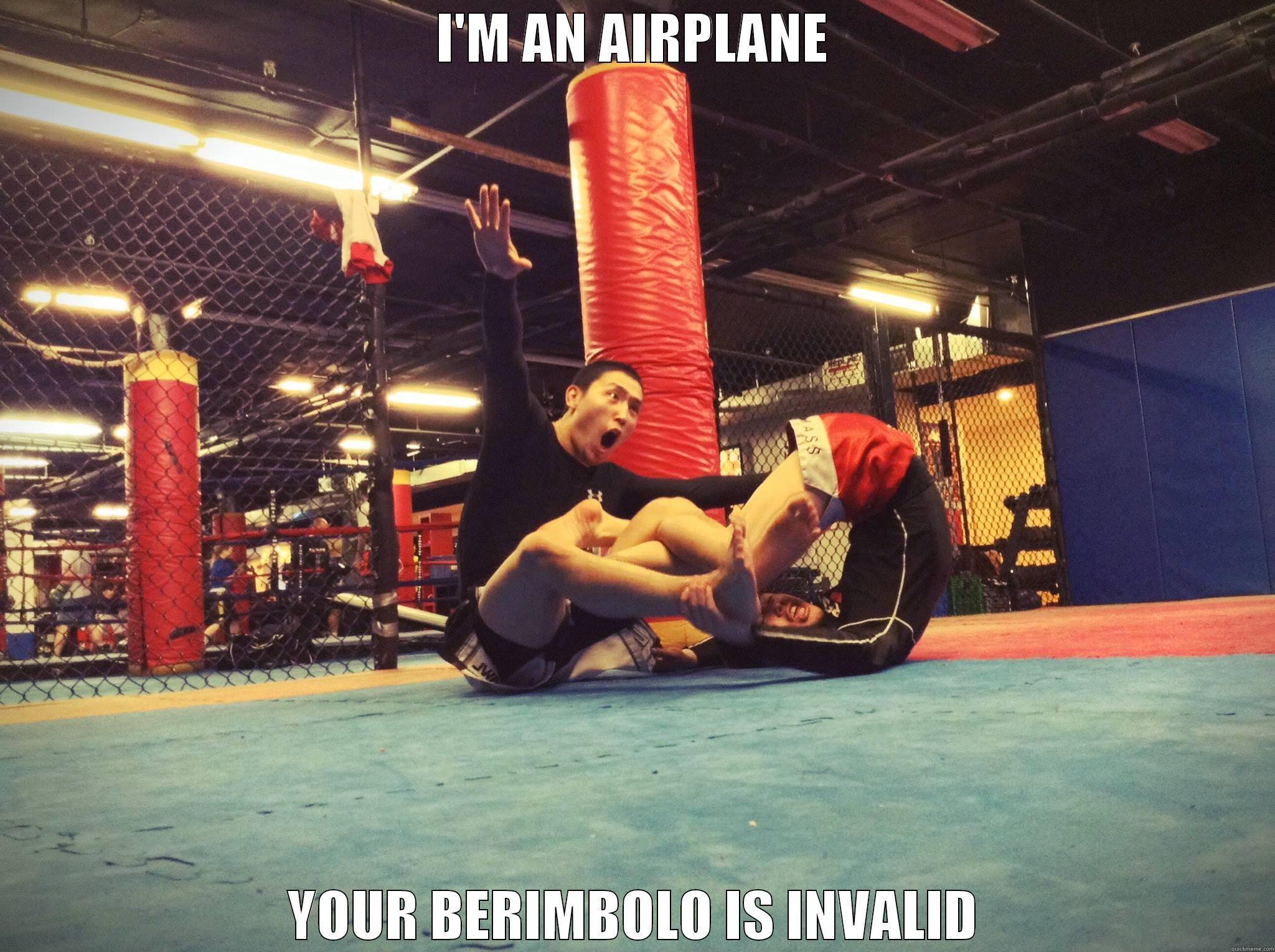
What to do when you pull guard and your opponent pulls guard at the same time? This is the famous double guard pull hated by many of the sport's and the martial art's legends such as Xande and Saulo Ribiero:
If I ever find myself in a position like that, I either attack immediately or just get off my butt and work to pass. If I get swept or passed, then the guy's guard is better than my passing / attacks and it highlights a weakness in my game I need to work on, but hey that's just me.
Obviously, not all double guard pulling is stalling. Check out this neat attacks from people who know far more than you and I:
Here's the best instructional ever on how to do the Berimbolo attack:
BJJ DVD Review: Peruvian Dozen 2.0 by James Clingerman

What a great DVD! I was very pleased with the Leg Drag DVD that my friend Mr Tim Sledd sent me to review and soon after I published that review, I came in contact with the man behind that production company The Fight Hub: Mario Roberto Black Belt Mr James Clingerman. We got talking and I really liked his work ethics and he liked the thorough job I did on Tim's DVD so he sent me three volumes to review for the Part Time Grappler readers. Since then, university happened and I've had to do the work, if you can call it that, piecemeal by piecemeal. Here is my review of the first one:
The Peruvian Dozen 2.0
James builds this DVD in segments:
1. The Peruvian Necktie as a finishing attack and how it sits with other finishes.
2. The Peruvian Necktie as a defined positional strategy and your position and submission options from there.
3. The Peruvian Necktie as a quick, transitional position and where you can go from there.
The Peruvian Dozen 2.0 is a great production and well worth the humble price ($39). More importantly, James is one of the good guys with a lot of great jiujitsu to teach so support him and his community. Why do I know this? Because he's been gracious enough a LOT of material on YouTube:
You can get the Peruvian Dozen from here.
BJJ and the Cycle of Action
You didn't think Helio rolled competitively every day did you?
When I’m rolling competitively I'm always initiating attacks. Always. It might feel like I'm just laying on you in side mount or just holding your head in my guard but believe me I'm actively working to kill your arms in the former and rocking your balance (kuzushi) in the latter to initiate a flower sweep or a back take. At the very least, I'm working to create a posture deficit to my advantage. This is something I've worked hard to develop over the past few years. To me, this is one of the strongest links between BJJ and MMA*.
But as I said above, this goes both ways. The other person is doing the same thing. They are constantly defending and negating my actions, trying to set up their own. This places the following three sets of demands on you:
Mental: As Saulo says in this clip, the only thing that differentiates us on the mat is the heart, and for this style of BJJ you need a huge heart. It's not easy. You're constantly working. Constantly flowing. Constantly in the moment.
Technical: You need to know your techniques inside and out. If your takedowns are getting stuffed and your passes ending with you getting swept then you will eventually stop doing them or at least hesitate to initiate them. Your momentum will be turned against you and you will start freezing.
Physical: I put this last because even though I acknowledge that BJJ, MMA or any combat sport places physical demands on you (strength, cardio, balance...etc.) these can never overshadow technical knowledge and having a big heart.
Start today. Grab a piece of paper and write down three attacks from each position you know and work out how to link them. The next time you roll competitively**, start from one of those positions and just machine-gun those 3 attacks in succession at your partner and watch your progress rocket***! Speed is not essential. Technical knowledge, heart and flow are.
----------------------
*Martyn, our coach at the LABS - FIGHTING FIT MANCHESTER, has always kept the MMA mindset with us. He couldn't care less if we ever compete (whether in gi-jiu jitsu, submission wrestling or MMA) or if we are just training for fun or self-defence. To him, you always keep to the positional strategy and hierarchy of BJJ.
**I don’t roll competitively often at all. I do it every week or two just to stay sharp and more nearer *the rare) competitions.
***Roy Harris wrote a classic article on Progress in Jiu Jitsu and the different belts.
----Did You Like This Article?--- Click here to add The Part Time Grappler to your Favourites / Bookmarks ---------------------------------
BJJ / Grappling Back Take Tips: The Secret to Successful Armdrags

Commitment is very important in martial arts in general and especially so in BJJ and grappling. Coming to BJJ from the "one-punch-one-kill" mentality of Karate, every BJJ coach / instructor I've learned from has stressed upon me that in grappling, moves are never a one-off and combinations are the key to success. Nonetheless, you must commit to each individual technique, have full faith in it and never do it half-heartedly. This is never truer than in the example of armdrags.
The heart of armdrags (irrespective whether from closed guard, open/butterfly guard or even standing) is in the first two moves:
1. Clearing the arm to the side
2. Reaching your arm across his back to the opposite lat.
What you do from here depends really on where your partner’s weight is and your own preference really… Christian Graugart gives a very nice breakdown of a few options on his blog. Above all, however, nothing will work unless you completely own that arm, and that is achieved by hugging/clinching tightly.
Leave behind the false notion that pure technique involves no muscle exertion. That is a misunderstanding! The art is pitting your strengths against your partner’s weaknesses: Your two legs against their neck (triangle) your hips and back against their biceps (arm bar) and, in the case of the armdrag, your clinching musculature against an isolated lat and rear deltoid! Once you get the arm past your centre line, you own it. Maintain a tight hug while you advance to the back (or any other option).
In the words of Beatrix Kiddo: Those of you lucky enough to have your lives, take them with you. However, leave the limbs you've lost. They belong to me now.
BJJ / Grappling tips: Take the back from mount

What's the best way to take the back from mount?
While there are many ways to take the back from the mounted position, it's important to remember why you are doing it.
Some back control options like the face-down control and the Body triangle control lock you to the opponent's back, meaning your number one attack option is the choke (rear naked choke, sliding gi choke...etc.) while other controls like the double hook control and triple threat back control open up other back attack options (armbars, bow and arrow choke, the twister neck crank...etc.)
Different methods to take the back from the mount (or any other position) will get you into different back control positions,
Rickson Gracie black belt Mr Henry Akins shows taking the back from mount: Old school with a focus on MMA / Self defence / Vale Tudo. He highlights that when strikes are allowed, you would be taking a larger risk by pulling the opponent onto you.
I call this the Back Ake from mount!
--------------------------------------------------
ZHOO ZHITSU IS FOR EVERYONE!
Liam "The Part Time Grappler" Wandi
Proudly sponsored by Predator Fightwear: Built for the kill and Brutal TShirt: Made By Grapplers For Fighters
BJJ / Grappling Back Take Tips: Successful Armdrags and the way Roger Gracie takes the back
One of the newer BJJ enthusiasts at the Labs comes from a Karate background. The particular style of Karate he had trained featured an important aspect in their sparring called Sabaki.
Sabaki (捌き) simply means management or handling but it's often translated to "movement". The reason I like "management" is because it indicates movement with an intent or purpose. In modern Karate, Sabaki* aims to take you out the opponent's line of fire and into a position where you can attack with less/no chance of getting hit back. I was having a short chat with my new friend and the more we talked about Sabaki the more it reminded me of this article I wrote a couple of years back on taking the back with an armdrag.
Sabaki (捌き) simply means management or handling but it's often translated to "movement". The reason I like "management" is because it indicates movement with an intent or purpose. In modern Karate, Sabaki* aims to take you out the opponent's line of fire and into a position where you can attack with less/no chance of getting hit back. I was having a short chat with my new friend and the more we talked about Sabaki the more it reminded me of this article I wrote a couple of years back on taking the back with an armdrag.
BJJ Tips: Smooth BJJ. Take the back and choke a brother out!
One of the best compliments someone can give you in Brazilian Jiu Jitsu is that you move smoothly on the mat. I'm nowhere near that, but I have noticed that the more details I learn about moves in BJJ the more I can polish these grappling moves and make them smoother. No where is this more apparent in grappling than in transitions between positions.
In the video clip below, Mr Italo Fereira (black belt from American Top Team ATT) shows me, Ian, Jay and Martyn (it was a Fighitng Fit Day-Trip) how to break the turtle position and move into a killer banana-split choke.
--------------------------------------------------
Liam "The Part Time Grappler" Wandi
Proudly sponsored by Predator Fightwear: Built for the kill
----Did You Like This Article?--- Click here to add The Part Time Grappler to your Favourites / Bookmarks
In the video clip below, Mr Italo Fereira (black belt from American Top Team ATT) shows me, Ian, Jay and Martyn (it was a Fighitng Fit Day-Trip) how to break the turtle position and move into a killer banana-split choke.
--------------------------------------------------
Liam "The Part Time Grappler" Wandi
Proudly sponsored by Predator Fightwear: Built for the kill
----Did You Like This Article?--- Click here to add The Part Time Grappler to your Favourites / Bookmarks
BJJ / Grappling Techniques: Taking the back from passing the guard
BJJ belts and belt ceremonies are a much discussed and controversial topic, but I must say I love this quote from BJJ Heroes:
"In his usual spirits, the charismatic Master Carlson liked to surprise his students with the unexpected, and surprised Ricardo Cavalcanti was indeed when he received his black belt outside a steak house in Barra (Rio de Janeiro) after a fine meal."
Imagine that! "How about that T-bone? Here's your black belt by the way!"
In this clip, Ricardo shows a transition from stack passing the guard to taking the back and finishing with a gi choke. Whether this particular guard passing strategy become a staple of your BJJ diet, pinning the arm with your knee is definitely a strategy I'm going to experiment with now! Enjoy.
Liam "The Part Time Grappler" Wandi
----Did You Like This Article?--- Click here to add The Part Time Grappler to your Favourites / Bookmarks
"In his usual spirits, the charismatic Master Carlson liked to surprise his students with the unexpected, and surprised Ricardo Cavalcanti was indeed when he received his black belt outside a steak house in Barra (Rio de Janeiro) after a fine meal."
Imagine that! "How about that T-bone? Here's your black belt by the way!"
In this clip, Ricardo shows a transition from stack passing the guard to taking the back and finishing with a gi choke. Whether this particular guard passing strategy become a staple of your BJJ diet, pinning the arm with your knee is definitely a strategy I'm going to experiment with now! Enjoy.
Liam "The Part Time Grappler" Wandi
----Did You Like This Article?--- Click here to add The Part Time Grappler to your Favourites / Bookmarks
BJJ / Grappling Tips: Swedish Twister
Eddie Bravo named a new submission after my home country: The Swedish Twister!
I suppose I'm gonna HAVE TO work this now for a few months :)
Liam "The Part Time Grappler" Wandi
----Did You Like This Article?--- Click here to add The Part Time Grappler to your Favourites / Bookmarks
I suppose I'm gonna HAVE TO work this now for a few months :)
Liam "The Part Time Grappler" Wandi
----Did You Like This Article?--- Click here to add The Part Time Grappler to your Favourites / Bookmarks
BJJ Tips: Taking the back from mount
This is not an instructional clip. This is me doing something I absolutely love - Brazilian Jiu Jitsu - with two people I absolutely love - My brother Sam and my sister Nadin.
Family Jiu Jitsu Rocks!
----Did You Like This Article?--- Click here to add The Part Time Grappler to your Favourites / Bookmarks
Family Jiu Jitsu Rocks!
----Did You Like This Article?--- Click here to add The Part Time Grappler to your Favourites / Bookmarks
The Fastest Way to Learn BJJ / Grappling
Last Monday, one of our up and coming BJJ white belts said to me: why do you place more importance on awareness than on techniques? I was very chuffed to hear that of course (it means somebody is reading this blog). The reason to me is quite simple: I do it because I'm a part timer and you learn, at least, twice as much by working your awareness than when you are hunting particular techniques.
What I mean by that is I don't pay too much attention to memorising exact sequences of limb placement and call them a pass, sweep or submission. Instead, I learn and practice the fundamental postures and pressures that make or break the position and take it from there.
For example, I don't always cross the arm when I'm triangle choking my partner. The make-it-or break it detail is to close their arteries with my hamstrings on one side and their shoulder on the other and that's the posture and pressure I focus on achieving.
What do I mean when I say that I learn more BJJ faster this way? What I'm referring to is those translatable fundamental postures and pressures. I've said many times that most of what works in e.g. mount will work in guard and Martyn always tries to link ground work to wrestling against the cage wall. So rather than learn 12 ways to pass the open guard I'd rather work on the safe way to approach someone's open guard, the postured that will put them at a relative disadvantage and start feeding them pressures from an advantageous position.
The beautiful thing is, if I lather, rinse and repeat I will quickly end up learning all those aforementioned 12 passes without consciously trying AND those fundamental postures and pressures will translate automatically into better mount escapes and back takes! Double BJJ bonus!
I'm a part time grappler. I've got stuff to do. I'm outta here!
Now remember the Crazy Ass Design Your Dream BJJ Gi Challenge available here: http://crazy-ass-bjj-gi-challenge.blogspot.com/
There are already some awesome ideas on it. Go there, download the blank canvas and give it your most creative of juices!
You too could be the proud winner!!!
----Did You Like This Article?--- Click here to add The Part Time Grappler to your Favourites / Bookmarks ---------------------------------

What I mean by that is I don't pay too much attention to memorising exact sequences of limb placement and call them a pass, sweep or submission. Instead, I learn and practice the fundamental postures and pressures that make or break the position and take it from there.
For example, I don't always cross the arm when I'm triangle choking my partner. The make-it-or break it detail is to close their arteries with my hamstrings on one side and their shoulder on the other and that's the posture and pressure I focus on achieving.
What do I mean when I say that I learn more BJJ faster this way? What I'm referring to is those translatable fundamental postures and pressures. I've said many times that most of what works in e.g. mount will work in guard and Martyn always tries to link ground work to wrestling against the cage wall. So rather than learn 12 ways to pass the open guard I'd rather work on the safe way to approach someone's open guard, the postured that will put them at a relative disadvantage and start feeding them pressures from an advantageous position.

The beautiful thing is, if I lather, rinse and repeat I will quickly end up learning all those aforementioned 12 passes without consciously trying AND those fundamental postures and pressures will translate automatically into better mount escapes and back takes! Double BJJ bonus!
I'm a part time grappler. I've got stuff to do. I'm outta here!
Now remember the Crazy Ass Design Your Dream BJJ Gi Challenge available here: http://crazy-ass-bjj-gi-challenge.blogspot.com/
There are already some awesome ideas on it. Go there, download the blank canvas and give it your most creative of juices!
You too could be the proud winner!!!
----Did You Like This Article?--- Click here to add The Part Time Grappler to your Favourites / Bookmarks ---------------------------------
Invisible BJJ Details: Tips on the Palm Up Palm Down Cross Collar Choke

I covered for Martyn last night, coaching both the Fundamentals and Advanced BJJ sessions. I had planned the first to evolve around the art of getting a deep cross collar grip and the options that that can present (chokes, armbar, back take...etc.) and the second session around preventing stalling in a competition scenario. The second session was hard physically. Very hard, actually. One of our blue belts is competing at the Gracie Invitational this weekend and I had designed that session with him in mind, but I will get back to that in another post.
The first session covered details that you don’t usually see and it was inspired by a quote from John Will’s blog: “Notice what no one else notices and you’ll know what no one else knows.”
There are very few secret moves in BJJ / Grappling nowadays. The real secret is and will always be in your application of the moves and your commitment to the level of detail. The Cross Choke from guard is a great example because when done correctly (with three rotations/shrimp movements and the correct wrist action) it will go on so fast, you’ll tap before you even realise you’re tapping. When done with any less than 100% commitment to the technique, it can still work (of course it can – it’s a choke and even a heavy shoulder bag can choke you!) but it will need a lot of muscle and much longer to set in.
It took me at least 20 minutes of repetitions to convince the whole group of exactly how deep I wanted the first hand needs to go into the collar. I mention that for two reasons:
1. They all saw me demonstrate the move a number of times and they all understood what I was saying, but they had probably seen the move so many times before that their eyes were on autopilot. I had to go around to each training pair and say: “Good. Now push that hand at least 2 more inches in. Crunch up and push that hand in and behind their neck”
2. I don’t remember this level of detail being shown to me in a BJJ / Grappling class. If it was, it wasn’t afforded the time it needed to sink into my slow brain. I had to re-learn this choke by rewinding matches and digging into lots of DVDs until I found it and I’m sure that this is the situation for most players.
The way BJJ / Grappling classes are taught at most schools nowadays*, everybody wants at least 3-4 moves from the instructor or they tell you that the class was boring. Well I can put my hand on heart and tell you that when we rolled in the second hour, every single one of those white and blue belts had a much deeper** and more threatening Cross Collar Choke. They learnt something so well that they could apply it successfully in the same day.
Look for the invisible detail. When you find it, drill it against progressive resistance. That’s the easiest and fastest way to gain a deeper understanding of the BJJ / Grappling game.
------------------------------------------------------
*Carlos Valente, 6th degree black belt under Rickson Gracie, talked about this in a great interview on the Fightworks Podcast back in 2006.
**Stephan Kesting lays down the law on deep collar grips in this excellent and concise article.
----Did You Like This Article?--- Click here to add The Part Time Grappler to your Favourites / Bookmarks ---------------------------------
BJJ Concepts: Why the Cross Face?

We covered half guard principles in yesterday's BJJ fundamentals session. Martyn focused on the bare essentials of success for both top and bottom and then we did a series of progressive resistance drills to experience it all in an alive manner. He actually made clear that showing any more passing details at this stage may confuse beginners and falsely encourage them to forget the essential set-up details and get lost in the intricacies of passing, only to get their backs taken or swept.
After the session, someone asked me about my previous post about just that, the bare minimums. I always get so chuffed when someone actually reads my stuff. The question was about why I gave the bottom player a priority that was something other than simply the opposite of the top player's, specifically for the half guard. To be exact, if I think that the minimum the top player needs to do is flatten her partner, why do I not simply recommend that the bottom player fights to stay on her side and off her back? Why do I instead recommend that they focus on fighting the cross face? Well, for number of reasons:
There are many ways to get flattened on the bottom and the cross face is one of the best so essentially you are fighting to stay on your side by fighting the cross face. Preventative action and all that jazz.
But also, I wanted to stress that sometimes it's ok to take a step back in order to jump two steps forward. When the top player tries to get the cross face to flatten you and fails, he can still flatten you with other tools (circle walk, far under-hook, near elbow control and more elaborate ones) but you, the bottom player, can recover from them much more reliably than from a well-placed cross face. Like Saulo says, you have to assept that sometimes the other guy is better than you or at least was earlier than you. So what's the first thing to recover from/protect against? The cross face.
What if we get flattened while fighting off the cross face? Assept that, then bridge and shrimp to turn back onto your side. Why can you get away with that simple move, because your face is NOT crossed!
There are many ways to get flattened on the bottom and the cross face is one of the best so essentially you are fighting to stay on your side by fighting the cross face. Preventative action and all that jazz.
But also, I wanted to stress that sometimes it's ok to take a step back in order to jump two steps forward. When the top player tries to get the cross face to flatten you and fails, he can still flatten you with other tools (circle walk, far under-hook, near elbow control and more elaborate ones) but you, the bottom player, can recover from them much more reliably than from a well-placed cross face. Like Saulo says, you have to assept that sometimes the other guy is better than you or at least was earlier than you. So what's the first thing to recover from/protect against? The cross face.
What if we get flattened while fighting off the cross face? Assept that, then bridge and shrimp to turn back onto your side. Why can you get away with that simple move, because your face is NOT crossed!
----Did You Like This Article?---
Make sure you add The Part Time Grappler to your Favourites / Bookmarks
---------------------------------
Make sure you add The Part Time Grappler to your Favourites / Bookmarks
---------------------------------
BJJ Concepts: Fundamentals = The Least You Can Do

You'll see a lot of people going on about "concept" vs "technique" and nowadays you can get fantastic sets of DVDs that will show you both. In HD!
The way I see the two:
Concepts are the first thing you need to concern yourself with in any position. They are the make it or break it detail. They say you can't make an omelette without breaking some eggs. Bingo! That's your concept.
Techniques are means to an end. They are sets of steps that lead to a destination or outcome. Usually that end is a new concept or at least an extension or a variation on a previous one. A basic egg cracking one is when you use both hands and a flashy advanced one is when you do it single handedly. Any one else getting hungry?
Here is my list of concepts for the most common situations in a roll.
Mount Bottom:
Keep your elbows glued to your ribs (unless strikes are allowed)
Half guard Bottom:
Prevent the cross-face
Side Control Bottom:
Turtle Bottom:
Turtle Top:
Let them carry your weight
Inside Closed Guard:
Keep them flat on their back and in front of you
Inside Open Guard:
Keep your elbow(s) connected to your thigh(s) to block their hooks
Half Guard Top:
Get them flat on their back
Get them flat on their back
Side Control Top:
Make them carry your weight
Mount Top:
Remove obstacles and climb your knee(s)
Closed Guard:
Get your body off-centre
Open Guard:
Entangle their leg(s)
This, of course, is not all you need to do, but you'll struggle to do anything productive if you violate these. There is a variety of ways to achieve these concepts. Those are techniques. You can spend a lot of money and time learning techniques but chances are they won't work* unless you observe the concepts first.
Furthermore, if you run into a situation where your techniques aren't working or they are taking a whole lot of energy/strength/speed to do so, check your underlying concepts.
----Did You Like This Article?---
Drop me a line on parttimegrappler@ymail.com or explore some of the recommended past articles on the right...
Drop me a line on parttimegrappler@ymail.com or explore some of the recommended past articles on the right...
----------------------------------
*You can violate a concept intentionally, setting a trap. This, of course, is not advised early on but you will see the advanced players do it now and again.
What Are The Fundamentals in BJJ / Grappling?

Martyn posed a great question on Facebook yesterday about how BJJ may resemble a tree. After many a silly answer (thanks Jake!) it came clear that he was hinting to the support the branches receive from a strong and sturdy trunk (the Foundation). Manik also made a very smart, out-of-the-box contribution that, to me, sounded very Avatar-inspired.
A lot of weight is placed on the fundamentals of BJJ, and of course rightly so. But what are they? What are the fundamental techniques of BJJ?
The first time I saw a good list of fundamentals was on Mr Roy Harris' website (which has a wealth of infromation and articles free for all to access. The man is a genius!). The funny thing is, when I saw that list back in the day, I didn't really understand much of it! Adding to that, I wasn't really doing much BJJ / Grappling at the time so I had no training partners or coach to ask and in 2001, the internet wasn't as overloaded with BJJ information as it is now.
Nevertheless, a day or two has passed since 2001 and I have come to re-arrange Mr Harris' list into my own progression which is what I use as a guidline both for my own training and for private sessions.
Basic BJJ Moves:
-Bridge
-Shrimp
-Sit shrimp
-Roll over your shoulder
-Box Drill
-Flip hips over
-Flip hips under
-Light legs
Guard Bottom
-APE-principle
-Breaking posture
-Shaking base
-Working towards the back
-Arm wrap pit stop
-Head and arm posture
-Knee Shield posture
-Biceps ride posture
-Harness control
-Scissor Sweep – Standard variation
-Scissor Sweep – Knee push variation
-Hip Bump Sweep
-Flower / Pendulum sweep
-Technical standing from guard
-Triangle choke
-Cross choke(s)
-Guillotine choke
-Kimura
-Straight armbar(s)
-Omoplata
Half Guard Bottom
-Stone Squirrel Posture
-Getting to your knees (dogfight)
---Knee tap
---Plan B
-Pull Guard
Half Guard Top
-Circle to flatten
-Underhook to flatten
-Wizzer
-Tight knees
-Cross Face
---Escrima pass
Mount Bottom
-Survival posture
---Elbow knee
---Back door shrimp Escape
Mount Top
-Low Mount
---Mount maintenance
---Americana
---Arm triangle choke
-High Mount
-Technical Mount
---Arm wrap pit stop
---Arm bar – Wing choke – Americana Triple attack
---Back take
Back Bottom
-Survival posture
---Turn to face escape
---Shrimp down escape
---Mount Awareness
Back Top
-Hooks and Harness
---Transition to mount
---Bow and Arrow Choke
---Arm triangle Choke
---RNC
Side control Bottom
-Survival posture
---Bridge, Shrimp and Connect: BSC
---Pull guard
---To your knees
Side control Top
-Weight awareness
-Position 1: Far Harness: Cross face & Underhook
---Knee on Belly to Mount
-Position 2: Modified Scarf Hold
-Position 3: Reverse Scarf Hold
---Mount
-Walk side-to-side incl. North/South
Passing
-Guard posture and breaking
-Base and posture
-Standing in Guard
-Sitting guard break
-Standing guard break
-Defence against:
---Triangle choke
---Cross choke
---Guillotine choke
---Kimura
---Straight armbar
---Omoplata
-Combat base Low
---Double under
---Knee-thru Pit stop
-Combat base High
---5 Passing energies
Stand-up
-Posture
-Stance
-Grip fighting
-Pummeling
-Arm drag
-Head snap
-Duck under
-Faint
-Defense
---Stuff-Underhook-Sprawl
---Walk past the guard pull
-Offense
---Double Underhooks
---Leg hook trip
---Fold over
---Knee Tap
-Over Under
---Leg attack combo
Of course, there are loads more techniques that some may consider as essential fundamentals and I'm sure some will look at my list and think "I don't agree that that technique should be there". That's cool.
Once again, to me, the techniques are just stills from the moving picture that is BJJ. Put two grapplers together and they will form postures, exert pressures and open up a number of possibilities and the way I look at what makes the cut for the fundamentals list is simply "Which techniques will enforce the best overall habits, using the least energy, creating the biggest posrture deficit with the opponent and open up the best possibilities?"
The much-discussed Gracie University looks at the fundamentals in a somewhat different light. Their Gracie Combatives Course define them as: The 36 techniques that are most likely to save your ass in a no holds barred fight (my words, but the gist is there). It's a very refreshing view that simplifies many things in BJJ (to open the guard of an a non BJJ schooled attacker, simply punch his face once or twice) but of course leaves a number of questions unanswered with regards to sport BJJ or Submission Grappling. Slideyfoot did one of the best reviews I've ever read on the Gracie University material.
----Did You Like This Article?---
Drop me a line on parttimegrappler@ymail.com or explore some of the recommended past articles on the right...
BJJ Tips: On Systems in BJJ / Grappling

Have you ever heard about someone with upper-back, or even neck and shoulder, problems who goes to a physio or a chiropractor only to hear the problem actually lies in their hamstrings or knee or even the type of shoes they wear?
The body is not by any means one rigid structure but rather a system of systems and an influence* anywhere will have two effects:
The body is not by any means one rigid structure but rather a system of systems and an influence* anywhere will have two effects:
- Local effect: You bump the toes on your left foot. They will hurt and, depending, may need medical attention.
- General effect: the pain forces you to avoid putting pressure on it, which can lead to overcompensation when you walk, run or roll.
This can potentially turn into a curse (excessive tension, predictable game...etc.) or a blessing (innovative solutions, higher focus on hip movement…etc.). Just look at the innovative half guard of Nino Shembri.
Some of you might recognise this in your BJJ Grappling and wonder how you can neutralise it. In other words: how do I put my current game thru an MOT Test? The answer is of course not to by learning new techniques but by going back to basics. There are fundamental concepts that are the building blocks of technique. If you always work to improve these, the techniques themselves will stay top notch and you will start discovering your own versions and small additions that make your game YOURS.
Now this all sounds nice and tidy, but what are those magic fundamentals? Well since you ask, I am in the process of releasing a series of DVDs and…..just kidding!
Your instructor can show you the fundamentals
Saulo’s Jiu-jitsu University can show you the fundamentals
 Saulo’s Brazilian Jiu-Jitsu Revolution
 DVDs can show you the fundamentals
Stephan Kesting’s Roadmap DVDs can show you the fundamentals
Roy Dean’s Blue Belt Requirements can show you the fundamentals
Or…and you can tell this is my favourite as I’ve saved it for last…you can discover (most of**) them thru the 3P – Aliveness approach! Thanks Cane!
If you’re under mount and keep getting armbarred, you need to realise that you are letting your elbows leave your sides. That’s a fundamental posture. You don’t need me, Saulo, Stephan or anyone to tell you that. The armbar will tell you that.
So to wrap up:
Some of you might recognise this in your BJJ Grappling and wonder how you can neutralise it. In other words: how do I put my current game thru an MOT Test? The answer is of course not to by learning new techniques but by going back to basics. There are fundamental concepts that are the building blocks of technique. If you always work to improve these, the techniques themselves will stay top notch and you will start discovering your own versions and small additions that make your game YOURS.
Now this all sounds nice and tidy, but what are those magic fundamentals? Well since you ask, I am in the process of releasing a series of DVDs and…..just kidding!
Your instructor can show you the fundamentals
Saulo’s Jiu-jitsu University can show you the fundamentals
Saulo’s Brazilian Jiu-Jitsu Revolution DVDs can show you the fundamentalsStephan Kesting’s Roadmap DVDs can show you the fundamentals
Roy Dean’s Blue Belt Requirements can show you the fundamentals
Or…and you can tell this is my favourite as I’ve saved it for last…you can discover (most of**) them thru the 3P – Aliveness approach! Thanks Cane!
If you’re under mount and keep getting armbarred, you need to realise that you are letting your elbows leave your sides. That’s a fundamental posture. You don’t need me, Saulo, Stephan or anyone to tell you that. The armbar will tell you that.
So to wrap up:
- Realise that you are a system of inter-linked systems.
- If you run against a problem or a challenge, retrace your steps back to where you broke a fundamental or two, rather than adding new techniques that will in turn be resting on shaky fundamentals.
- Once you correct that error, keep your awareness level high and try to notice what general effects this correction may have had on the rest of your game (going back to the armbar from mount example, once you learn to keep your elbow glued to your side) are you getting less and less arm-dragged or Kimuraed? Are you giving away the under-hook less often when playing guard/half guard?)
- Saulo, Stephan Kesting & Roy Dean release top notch material.
I just got an idea! I’m going to right down a list posture fundamentals and ways in which my Grappling would suffer if I broke them. I suggest you do the same.
-----------------------------------
*It could be a positive (preference) or negative (injury) or neutral (mimicking of peer)
**This is 2010. You don’t have to re-invent the wheel. Please feel free to get some good resources but remember that reading/watching/talking about the fundamentals and knowing/doing/experiencing the fundamentals are not the same thing. Why not get one or all of these resources and combine them with what your coach/instructor is giving you to discover the fundamentals for your self.
-----------------------------------
*It could be a positive (preference) or negative (injury) or neutral (mimicking of peer)
**This is 2010. You don’t have to re-invent the wheel. Please feel free to get some good resources but remember that reading/watching/talking about the fundamentals and knowing/doing/experiencing the fundamentals are not the same thing. Why not get one or all of these resources and combine them with what your coach/instructor is giving you to discover the fundamentals for your self.
----Did You Like This Article?---
Drop me a line on parttimegrappler@ymail.com or explore some of the recommended past articles on the right...
Drop me a line on parttimegrappler@ymail.com or explore some of the recommended past articles on the right...
BJJ Tips: The Myths of BJJ / Grappling: Using Your Whole Body
You may have read somewhere that in BJJ / Grappling you are supposed to use your whole body against a part of your opponent's.
Well, I'm going to go out on a limb (no pun intended) and say that not true. At least not entirely.
Now before you click SEND on that hate mail, hear me out. While it IS important to employ a large structure and a solid frame against your opponent's muscular strength, it is just as important to learn what and when to relax. You shouldn't try to use your whole body all the time. Yes you will and should use your whole body during the full Grappling / BJJ session, but in synergistic cycles.
From a technical standpoint: you should dedicate a large part of your mat time to refining this. This is how the experts make the hard look easy.
From an athletic standpoint: explosiveness and endurance are the combat athlete's most valuable attributes and relaxation lies at the core of both of these.
“Ok I'm sold”, I hear you say, “How do I go about developing this?”
Preparation: pick a BJJ / Grappling position and write down the muscles that should be used in it.
Well, I'm going to go out on a limb (no pun intended) and say that not true. At least not entirely.
Now before you click SEND on that hate mail, hear me out. While it IS important to employ a large structure and a solid frame against your opponent's muscular strength, it is just as important to learn what and when to relax. You shouldn't try to use your whole body all the time. Yes you will and should use your whole body during the full Grappling / BJJ session, but in synergistic cycles.
From a technical standpoint: you should dedicate a large part of your mat time to refining this. This is how the experts make the hard look easy.
From an athletic standpoint: explosiveness and endurance are the combat athlete's most valuable attributes and relaxation lies at the core of both of these.
“Ok I'm sold”, I hear you say, “How do I go about developing this?”
Preparation: pick a BJJ / Grappling position and write down the muscles that should be used in it.

Now get a training partner and get into this position and actively question every muscle you catch tensing. Is it on the list? Should it be tense? When you are satisfied move on to another position and when you are really good it's time to start looking at movement. Transitioning efficiently between positions that you hold efficiently until you can, yes you guessed it, efficiently submit your opponent. That's what makes this game so beautiful.
------------------------------------------------------------------------------------
Ps. This is gonna take time! But hey, as Karl always says, time’s all we’ve got!
----Did You Like This Article?---
Drop me a line on parttimegrappler@ymail.com or explore some of the recommended past articles on the right...
Ps. This is gonna take time! But hey, as Karl always says, time’s all we’ve got!
----Did You Like This Article?---
Drop me a line on parttimegrappler@ymail.com or explore some of the recommended past articles on the right...
Subscribe to:
Posts (Atom)