Showing posts with label Eddie Kone. Show all posts

BJJ / Grappling Tips: Focusing on the Fundamentals Fosters A Truly Gentle art


When you hear the words Jiujitsu, BJJ, Gracie Jiujitsu or even grappling, what images come to mind?

Most uninitiated would probably visualise Hollywood Karate-esque pyjama fighting. Those who have witnesses Mixed Martial Arts events such as the UFC or Bellator may envisage that a jiujitsu mat is full of brutes wrestling each other to submission and, finally, those who have had a taste of the art will describe what they know to the level they know it with the grappling vocabulary they possess.

But the truth is that while Jiujitsu is a martial art and a thriving combat sport, it’s only as violent as the instructor teaching it. My own personal journey has lead me to favour brain over brawn, even though I fully appreciate the importance of athleticism and physicality. I am a self-diagnosed Martial Arts Geek, but I also love pushing the boundaries of what my body can do.


Making the best of what we were born with

When planning and / or delivering a private lesson, a group class or a seminar, I try to stay true to three rules:

BJJ / Grappling Tips: Cross Side Top Theme Part 3 - Submitting from the side mount

It's all about setting the right traps and removing obstacles (Image source: WatchBJJ)

In a previous post I explained the main concepts a jiujitsu practitioner needs to keep in mind to control their opponent from cross side top (ak. side mount or side control) and how to transition from the side to the full mount. I also promised I'd discuss what I have found to be the highest percentage ways to submit the opponent from side to mount so here we go:

The thing is, as you may have noticed from the previous two articles, my high-pressure control itself and constant threat of mounting usually opens doors to submission that wouldn't normally be there. Just take the Kimura Roger talks about in the previous post for instance: That's probably my favourite go to straight from side mount.

Check Article 2 in this series for details of this position

I am very grateful that almost every teacher I have ever had in jiujitsu and judo has emphasized the importance of crushing pressure without over-engagement from the arms. This has meant that the system I currently follow when attacking from the side goes like this:


  1. Kill the nearside arm: To do this from my version of the side mount, I use my shins to pin their forearm to the mat (preferably my south leg so I can ...)
  2. Post the north leg while isolating their farside arm further (putting my north arm deep in between their arm and their torso)
  3. Secure the kimura grip and attack with:
    • Kimura
    • lapel-trap paper-cutter choke
    • Leg scissor choke

I recently found a good video that demonstrates one variation of the lapel trap choke I mention above, although I would try to keep more pressure on the opponent:


Let's be crystal clear: My goal from the side mount is very simple: I want you to tap from my pressure alone. I will do everything I can to tip the scales in my direction when it comes to me having a stronger mechanical advantage, leverage and "comfort" and I will angle my body and contour around your frames and add more and more pressure until you tap from pressure alone. Going to mount and / or submitting you with a choke or armlock will always be my secondary option but because I am so pressure-focused, when I do actually go for the attacks, my opponent has had to endure some serious claustrophobia and their frames and spine are all out of proper posture. 


I hope you enjoyed this extended and detailed style of blog and that you spend the upcoming 5-6 weeks putting one or two tips out of it into your own practice. I welcome all feedback, just drop me a line through the link at the top of the blog.


Next topic: My favourite - the  mount.
--------------------------------------------------

ZHOO ZHITSU IS FOR EVERYONE!

Check for more resources on Amazon.com:

Support British Jiujitsu: Valor Fightwear

BJJ / Grappling Tips: Cross Side Top Theme Part 2 - transitioning to mount

In a previous post I explained the main concepts a jiujitsu practitioner needs to keep in mind to control their opponent from cross side top (ak. side mount or side control). I explained that I've found that the key to maintaining that control is through a combination of the right positioning / postures, weight distribution and pressures on the opponent body and limbs and I promised I'd discuss what I have found to be the most dominant ways to transition from side to mount so here we go:

From a private lesson I took from my teacher, professor Eddie Kone, many
years ago. Notice how free his hands are to attack and submit, as opposed to
being preoccupied with holding or squeezing the opponent.

I mentioned last post that there are many different ways of laying cross side on top of your opponent and that in this particular 6-week study, I'm focusing on the version closest resembling judo's kuzure yoko shiho gatame as opposed to the more often seen underhook-and-cross-face style of hold down. This is not to say that this is the only way I hold someone in side control. It's just my current favourite and the one I'm exploring. Naturally, my transitions to mount will flow directly (and sometimes indirectly) from that particular style of side control.

Kuzure-Yoko-shiho-gatame


Since my top arm is wrapped around the outside of the opponent's far arm, the body's naturally more incline to turn to face the legs than to face the opponent's head. What this means is that it would be more natural for me to transition to the mount using the high step method than through the knee slide method:

Screenshots are courtesy of Evolve University & Chew Jitsu
After flattening the opponent, I use my back to push and open up (separate from the torso) the opponent's nearside elbow. The flattening action actually makes opening the elbow easier.

Once the elbow is open and my back has shrimped away from their legs, I prop their nearside knee with my knee / upper shin (I don't feel it makes a difference which leg!) then drag both their legs down to collapse them before high stepping to the mount. Here's a nice clip of Mr Roger Gracie showing what I mean:


I have to admit, however, I do two things differently to Roger. I'm not Roger's size so I need to put in a couple of safety measures when I high step to mount:

  1. I use my nearside leg (the one I am not stepping over with) to hook under their nearside leg. This gives me my first leg hook before I've even mounted and prevents them sliding under me for a sneaky backdoor escape from the mount - aka elbow escape from the side control.
  2. I don't step onto the mat with my foot. Rather, I hook my heel on their far hamstring-area then use that connection to pull myself up onto them, sliding that heel deeper into what becomes my second leg hook. This slide is lead by the hips

Rather than stepping, hook the heel and pull yourself on top

In the next and final post on the topic of the Side Mount - Top, I will discuss submission opportunities that arise naturally when your control is tight and your mount transitions are always a threat! Stay tuned.

--------------------------------------------------

ZHOO ZHITSU IS FOR EVERYONE!

Check for more resources on Amazon.com:

Support British Jiujitsu: Valor Fightwear

How to Afford A BJJ Holiday: Jiujitsu in LA - Travel report of my 2018 visit


How can you afford your BJJ trips?!” Is one of the most common questions I get asked, right after “did you train with any big names out there?” and “when and where are you going next?

The reason these questions stuck in my mind and why I am sharing this is because it used to be me asking the questions. Like many Jiujitsu practitioners I used to enviously listen to or read about Jiujitsu vagabonding stories and wonder how the person made it happen, often dismissing it as an anomaly or at least something that I thought was beyond my control: “they have more money / time / connections / luck than I do”.

And who knows. Maybe I was right. Maybe I needed the post Social Media era to finally realise my (fairly modest) travel plans and dreams. All I know is that when I ask my friends about their Jiujitsu travel dreams, they all sound so...achievable.

To start off, let me outline the major obstacles to just picking up your gi or rash guard & shorts and just hitting the proverbial road and then offer a few suggestions as to how you can work around them.
After that I’ll give you my modest advice for travelling for Jiujitsu and I’ll finish with a breakdown of my most recent trip to the Gracie Academy HQ in Torrance, LA (aka Gracie University or Jiujitsu Heaven.)

Budget:


You need an outline. You need to be good at planning and sticking to the plan. I can give you my numbers and figures, but ultimately you need to plan around your own time and budget and you (have I mentioned this before?) need to stick to your plan. Here are my figures for my experience for a week in a major jiujitsu mecca in California such as San Diego or LA:

BJJ / Grappling Tips: Avoiding injuries by training jiujitsu without an ego

Squad: Training triangle chokes against a striking opponent.
Myself, Professor Kone and my friend Mr Shukie Lok.
Shukie, myself and Shaun got our black belt together.


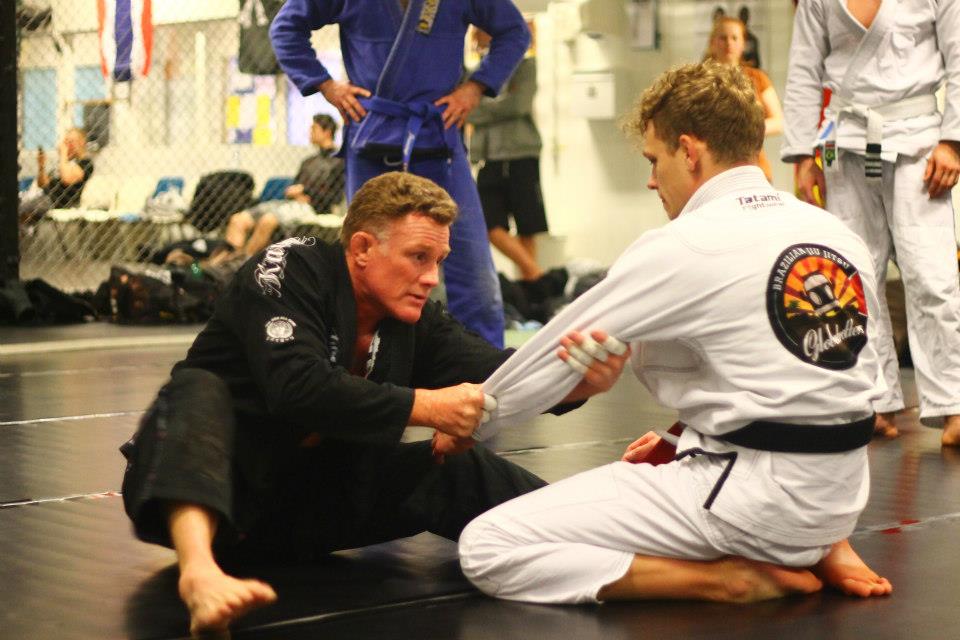
My jiujitsu teacher, Professor Eddie Kone, recently wrote a piece titled: "Separate your ego from your training. Train hard, but not like an a**hole."

Not only did I like the sentiment, I also liked the way he put his message across so I thought I'd share it here with you.


As most of you know a few weeks back I received an injury, The severity of the injury although not as bad as first thought was still a hindrance and rendered me unable to teach which the effect resulted in cancelling privates and having time away from the mat.

I just want to reiterate that injuries although are far and few between can happen, so how do we prevent or at least understand how they happen ?

I compiled some information for you to read at your own leisure, but one thing is for sure :-

Is BJJ a martial art?: Expressing the same principles in different ways


I've been listening to a lot of interviews with the two above Chrises: Haueter & Graugart, and thinking a lot about what it is about jiujitsu that we happily dedicate so much of our time and energy to. Why is it so engaging?

In a now famous grading speech by Chris Haueter, he talks about he misses the old days where the applicability of jiujitsu as a fighting art was still paramount and how, nevertheless, he loves the technical advancements of modern competitive jiujitsu. He seals the deal with the quote:

Watch Chris' full speech here: https://youtu.be/y-uF-9-EUho

We all get taught and shown the same fundamental techniques and principles of Brazilian Jiu Jitsu. Everybody gets shown the same fundamental guard passes and everyone is made aware that if you leave a hand in and one out you risk getting triangled...etc.. Not because there is some superior authority that runs around and checks that people adhere to abstract rules and regulations, but rather because BJJ and Grappling (and by extension MMA and all true combative sports) have an inbuilt reality-check: Does it work in sparring?

But while we are all taught the same principles for, say, chokes from side control, every athlete is free to interpret and indeed express these principles in her own way. Each athlete becomes, or at least is given the opportunity to become, an artist in their own right, with the jiujitsu mat being the canvas. Why else would we consider techniques, even when they bring us pain and discomfort, beautiful?

Just the other day I visited the Roger Gracie Academy HQ here in London where Mr Charles Negromonte was holding a fantastic class on specific sparring. We would spend round in the following geographies: Side, mount & back. Attacking and defending for full pelt. After the end of each double round (so both partners get a chance) Charles would stop the class and gather us all around to discuss any issues that may have arisen. I asked him about his favourite details regarding transitioning from side to the mount and the things he showed were nothing short of revolutionary to my game. Why? Because he provided me with amazing tools. Using the artist analogy, he upgraded my brushes and provided me with uber-rich palette of colours to paint with.


Academy Review: Eddie Kone Academy of Jiujitsu HQ


Looking through the archives of my blog I soon realised I'd visited and reviewed many academies both here in the U.K. and abroad, but never really written much about my professor's HQ academy here in north London. I guess it's natural as this is my home-base and the other places are ones I visit,  albeit some more regularly than others, so I assumed they'd be interesting for, well, other academy visitors too.

In retrospect, EKBJJ HQ has over the past few years had its own throng of visitors, ranging from white belts passing through town to 7th degree coral belt master delivering seminars. Either way, a review of the Academy of Jiujitsu was overdue.


The Academy's located on:

First floor, Unit DA4 Sutherland House
43 Sutherland Road  Walthamstow, London
E17 6BU

Why is Gracie Jiujitsu appropriate as a Self Defence Art?


Please watch this short demonstration of the Gracie Jiujitsu self defence curriculum and competition sparring by masters Rickson & Royler Gracie. 


I recently found myself on the train to my professor Eddie Kone's HQ academy to teach the Wednesday introduction and advanced classes. As always, the focus and centre of all the sessions at EKBJJ is Gracie Jiujitsu as a complete art of self defence and my reading companion for the train journey today is: Brazilian Jiujitsu Self Defence Techniques by Royce Gracie, Charles Gracie and Kid Peligro. 

If you're not familiar with the book, I highly recommend it as a 103 position / technique encyclopaedic overview of how the Gracie Family approach self-defence but before you get to these positions, there's a 17page introduction that is already worth the price of the book. The technical portion of the book deals with the how (and to a certain extent, the when) but that intro delves nicely into the why and why not. We're given a brief historical overview of Jiujitsu in Brazil but also two articles that, unfortunately, many academies I've visited around the world ignore. I'll share here a couple of bits out of each that I feel sum them well:

What is it about Brazilian jiu-jitsu that makes it so effective as a self defence system? 

We can break the answer into four main points:

1) it is designed to work even when you are surprised and in a poor position 
2) it is designed by small people to defeat larger ones 
3) it allows you to develop instantaneous reactions by practicing in extremely lifelike exercises and 
4) it provides you with a range of severity in dealing with your attacker

Now I invite you to rewatch this clip and ask yourself:

1) could those techniques have worked even when you are surprised and in a poor position?
2) would those techniques have allowed a small person to defeat a larger aggressor?
3) would it be possible to create extremely lifelike exercises and drills for these scenarios that'd facilitate instantaneous reactions? 
4) did you witness a range of severity in dealing with your attacker?


Training Guidelines:

Class structure: this is something I have quizzes every son or grandson of Grandmaster Helio's that I've met: If someone is on a tight schedule and can only make a one hour session 2-3 times a week, how should the professor structure their session?

Every single one agreed on one thing: Technique drilling and repetition and positional training / sparring is far more important, and therefore should hold the lion-share of a lesson, than free sparring. Check this excellent study by Gracie Jiujitsu black belt Mr Josh Vogel of positional sparring.


Study the art. Don't just train aimlessly and hope for the best.


--------------------------------------------------

ZHOO ZHITSU IS FOR EVERYONE!

Check for more resources on Amazon.com:

BJJ Tips: Opening the Closed Guard - a Gracie Humaita approach

https://ekbjj.wordpress.com/
In a recent post, I showcased the way my teacher Mr Eddie Kone passes the closed guard over the legs. A lot of people read, watched and liked that article and the video that came with it. Many, however asked questions regarding the way Eddie opens the guard, especially how to deal with an opponent who grips the lapel and sleeve, which is a very typical scenario in jiujitsu gi competition.

Eddie put together this quick video where I act as the training partner:

How to Open the Closed Guard:

BJJ Tips: Applying Armlocks and Teaching Gracie Jiujitsu

For a long time, I have been in love with Gracie jiujitsu and over the past 11 years, I have taught hundreds if not thousands of hours of group and private lessons and on a few occasions whole seminars*.
Showing the details of the armbar from guard

My first seminar at Forca Martial Arts.

My Charity Seminar at Stockport Gracie.

Happy seminar participants

BJJ: How to pass the closed guard - Old School Style!


Passing the closed guard is huge and very important part of Jiujitsu. In fact, there are many competitors who specialise in the guard pass: old school names like Rickson Gracie, Royler Gracie, Saulo Ribeiro and practically everyone on the Carlson Gracie Sr team plus new school names like Rodolfo Vieira and Leandro Lo. Even the rules of Jiujitsu competition recognise the importance of getting past the opponent's guard: 3 points. That's right. You don't get any points for the side control itself. You get three points for passing the opponent's guard, second only to the mount and back mount. 

I've always enjoyed both sides of the coin: playing guard and passing guard and while I appreciate the array of new techniques for both that are constantly cropping up everywhere I've always stuck to my mantra:

I don't have time to training variations. I therefore need to spend my limited mat time on:

1. Perfecting a small number of techniques from 1-2 positions
2. Perfecting ways to guide the game / match to these 1-2 positions

This is why my eyes perk up when I hear Jiujitsu teacher Eddie Kone say:

"We're going to spend the next month on the guard pass"

Not guard passes (multiple ways to pass). Not pass of guards (how to pass a variety of guard such as butterfly, closed, delariva...etc.). 

The guard pass.

We start in the opponent's closed guard. We neutralise their attacks. We open the guard while staying safe. We control and slowly but surely inch our way past the guard. The tightness is ridiculous. The pressure is generated before during and after is ridiculous. 

I'm talking about the kind of guard pass that makes the opponent TAP. 

BJJ Self Defence: Mestre Sylvio Behring


Some jiujitsu academies teach only sport jiujitsu while others teach the self defence curriculum alongside the sport techniques, barely paying lip-service to the raison d'être of jiujitsu. Very few academies, however, manage to keep both alive.

The video below of Master Sylvio Behring  you see exactly that. The stand up phase is addressed using the traditional techniques of self defence against an opponent trying to grab, pull, push, rush and even strike you. By manipulating the distance, you can stay safe and apply your jiujitsu. Master Behring's video really made me happy.


How to escape the mounted position III

Last BJJ / Grappling tips post and the one before talked about how to start the elbow knee escape from mounted position and then how to / when to execute it. In this one we’ll look more at what happens once you’ve escaped: correct conclusion. Just like the start/approach, the execution of escapes (or any technique) in Brazilian Jiu Jitsu / Grappling involves a number of deep elements: Just like the start/approach and the execution of escapes (or any technique) in Brazilian Jiu Jitsu / Grappling, the closing stage involves a number of magical and secret elements:

1. Prevent the recovery (e.g. using your inside leg to heavily trap their leg in half guard one you’ve escaped their mount)
2. Settle into your new position (e.g. once you’ve trapped their leg in half guard, start settling into a good half guard by protecting against the cross face, turning on your side and working for the underhook and other postures and pressures)
3. Start working for your next transition (e.g. from that solid half guard, post your inside arm against the inside of their knee, switch your control of their leg to your outside leg and start pulling your inside knee out to full guard)

Once again: If your escapes are not working, before anything else, check the list on the first post of these three.


How to get a brown belt in Jiujitsu: Surround yourself with greatness


"I became better at jiujitsu all on my own, with no help from anyone else", said no one ever.

Yesterday I had the honour to test and pass for my brown belt in Gracie Jiujitsu under my friend and teacher, Royler Gracie black belt and head of EKBJJ association, Mr Eddie Kone. Holy Jesus on roller-skates!

Since getting my purple belt back in January 2010, I've had the privilege to learn from a number of amazing coaches, mentors and legends. I'd like to say thank you to them:


  • Mr David Onuma
  • Mr John Will
  • Mr Christian Graugart
  • Mr Ryron Gracie
  • Mr Rener Gracie
  • Mr Rickson Gracie
  • Mr Steve Campbell
  • Mr Italo Feriera
  • Mr Nick Brooks
  • Mr Eddie Kone

BJJ / Grappling Tips: control vs management

Yesterday, I choked a white belt out from side control with the bread slicer choke (aka the fish bone). Here's a very nice and detailed breakdown of the choke by Kid Peligro:


I initially learned this technique from another Royler Gracie black belt, none other than Saulo Ribiero, or at least his amazing DVDs: Jiujitsu Revolution 1, but a couple of weeks ago I visited my friend and instructor Mr Eddie Kone and attended his Annual Gathering and there he taught, amongst many other techniques and concepts, the finer details of the bread slicer choke.


As soon as I settled in position, I started adding pressure onto my partner and I asked him:

-Are you ok buddy?
-Yes.

I started controlling the nearside arm and waited for him to move his far-side arm and as soon as I could, I pinned it with my head. All that was left was to grab his gi and apply the choke and the circular motion that Kid explains in the video above. I asked again:


-Are you still ok buddy?
-Yes.

I put the choke on and waited for the tap, but instead of realising he was in too deep, my partner started bridging and thrashing like mad, trying to push me off him. The thing is, the more he pushed, the more he released the gi that was trapped under him and the more material I had to work with. Tight tight tight!!

-Are you ok buddy?

No answer. But he was still moving.

I let go and looked at him, only to realise he had passed out. 

BJJ Grading: Black Belts - EKBJJ 3rd International Gathering and Black Belt promotion.


This weekend I attended the 3rd EKBJJ annual gathering and Black Belt grading seminar at my friend and instructor Eddie Kone's HQ academy in London.


The Gracie jiujitsu extravaganza stretched over both the Saturday and the Sunday, both days starting at 11.30 and finishing no earlier than 5pm. It included many modules: Self defence training, sport jiujitsu positions and transitions and, something I found unique, talks by several guests. We had talks by the teams behind Armour Wash and LiveWire (both of which sponsor Eddie) and by visiting black belt my dear friend Mr David Onuma, head of the Combined Fighting Systems of which The Labs in Manchester is a member. David spoke about the importance of having a balanced perspective when training and always being aware of the possibility of the assailant carrying an edged weapon, drawing on his experience in Jeet Kune Do and the Filipino Martial Arts.


The Sunday concluded with the black belt graduation. 3 brown belts whom had trained for over 12 years undertook the over 2 hr long test, demonstrating the full curriculum of Gracie jiujitsu self defence techniques (unarmed and armed), followed by gi, nogi and MMA sparring rounds with a fresh opponent every 2 minutes.


Safe to say, they came out as warriors. Many heart felt congratulations to Brian Paul, Mark Bottom and James Gregory.
Brian, Eddie, James and Mark
To add to the joy of the weekend, Mark asked his girlfriend to marry him and we're happy to report that she said yes!


I was happy to meet a few old friends at the EKBJJ academy but also very excited about making some new friends too. In fact, I was very happy to simply meet the friends I had come to know thru Facebook in real life such as MMA fighter Lisa McCallum and renowned theatre sensation Mr Shaun Escoffery, both of whom I struck a great chord with.


Jiujitsu wise, Eddie was very clear. We learnt no new techniques. Instead, we walked out with a ton of new details to old positions and techniques, both from the Self defence curriculum and sport jiujitsu (from guard passing to attacks from side control to finishing armbars). Further, the psychology of the Grandmaster's finishing mind set were discussed and then put into practice during sparring. I will be talking about this in much detail over future posts.

What I do want to conclude with the story of Brian Paul's black belt graduation speech.

You have to remember. Brian is 52 years young and he started around the 40 year old mark. When he received the belt from Eddie, he took off his gi top and showed us a tattoo on his left arm. He told us how when he started in jiujitsu, he really tried to best Eddie during sparring, but never quite managed to do it, even though Eddie is much smaller and lighter than him. One day, they all went to get tattoos and he said to Eddie he wanted to leave part of it blank. Eddie asked him why and Brian explained that he was not black belt so he'd leave that part blank as a symbol.


Brian welled up as he told us that Eddie told him to do it that part of the tattoo in black because one day you will be. He told him that he was simply a black belt in the making.

He believed in him, unreservedly. That's the quality of teachers and leaders I aspire to and surround myself with.

Brian's emotional words echoed what one of the most inspirational educators have ever told me. Let's call him Principle M:

The children might like the teacher who cares about them, but they will really listen to the teacher who cares for their future too.

Congratulations to Brian, Mark and James and to the whole Eddie Kone Gracie Jiujitsu family.

How awesome is that cake!

--------------------------------------------------

ZHOO ZHITSU IS FOR EVERYONE!

Liam "The Part Time Grappler" Wandi

Proudly sponsored by Predator Fightwear: Built for the kill and Brutal TShirt: Made By Grapplers For Fighters


Training Gracie Jiujitsu at EKBJJ HQ


This Monday I spent just under 6 hours on the mats with several regional instructors going thru the self defence curriculum of Gracie jiujitsu under the watchful eyes of Eddie Kone, head instructor of the EKBJJ Association and what an experience that was. Mind blown indeed.

BJJ / Grappling Tips: Self defence and Gracie Jiu Jitsu

With my friend Mr Eddie Kone, Royler Gracie
Black Belt and head of EKBJJ
The applicability of Gracie Jiu Jitsu as an art of self-defence is an area I have found myself increasingly interested in. I’ve never been a massive self-defence guy and I’ve always believed that you should work hard to gear your life in a way that you don’t necessarily find yourself in need of self-defence and I still stand behind that statement. Basically, if you’re becoming an expert and defending yourself against muggers or those who wish to harm you, you need to move house, stop showing off your iPhone and maybe work a little on your attitude!
That said, I have developed an interest in how self-defence and jiu jitsu actually link. It all started with me a few years back looking for a good online / DVD based source of jiu jitsu information and finding the Gracie University programme called the Gracie Combatives. I must iterate that, initially at least, my interest was in finding the best jiu jitsu instructionals I could get my hands on and not something particularly focused on self-defence per se. I was looking for someone who not only spoke excellent English, but could articulate their approach to jiu jitsu very clearly and for that reason, the Gracie Combatives was a great choice1. Rener and Ryron Gracie are excellent instructors with a wealth of experience and a very clear objective behind every lesson, something an aspiring high school teacher like me really appreciates.
What the Gracie Combatives also did was get me to appreciate, amongst many other things, the following:

1.       The value of indicators: For every technique, there is a clear indicator for when it’s best utilised. A simple and commonly known example is “when the opponent in your guard puts his hand on the mat, it’s time to attack him with the kimura” but there were many other ones I, as a BJJ purple belt, didn’t know such as when to switch from hips-down side control to hips-up kesa gatame…etc.2
2.       The value of head control: In practically every position on the ground, the opponent can gain a mechanical advantage over you by controlling your head and NOTHING reminds you to keep your head away the opponent’s hands like punches!3

A question was brewing in my mind:
 “Does a focus on self-defence (punch protection, conservation of energy, defence against attacks a skilled jiujitsoka wouldn’t do such as standing headlocks…etc., training against people of various sizes and experience levels…etc.) help better other aspects of your jiu jitsu (rolling, nogi, MMA, competition preparation…etc.)?”
I recently celebrated my 35th birthday and as a present, my wonderful wife hooked me up with a private session with my friend Mr Eddie Kone. Eddie is a Gracie Jiu Jitsu black belt under Royler Gracie and recently received his first degree through Rafael Lovato Jr and he’s also the head instructor of a large and growing jiu jitsu organisation. Most importantly, Eddie is dear friend of mine so I was very happy with my gift and the opportunity to spend some mat time with him.
Drilling the finer points of posture within the closed guard
When he asked me what BJJ skills / areas I wanted to cover in the session, the answer was very simple: Gracie Self-Defence. I wanted him to review and update my current understanding of defence against front chokes, rear chokes, bear hugs over / under the arms (both front and back), collar grabs, shoulder grabs and the basic hip throw from the safe clinch.
What Eddie did far exceeded my expectations. Not only did we cover all these in detail, and more techniques, he spent a good amount of time explaining the mind-set4 and framework5 within which these techniques fit. It was really mind blowing. The level of detail6 was fantastic but more than that, the attention to both the value of indicators and head control / knockout protection really cemented to me how authentic his approach to Gracie Jiu Jitsu is and I look forward to learning more from him.
More to the point, the adjustments he made to my self-defence techniques immediately addressed a couple of issues I’ve been having with getting some techniques to work when rolling! Look at this famous example from Kid Peligro’s and Royce and Charles Gracie’s book “Brazilian Jiu Jitsu self defence techniques”:
The devil is in the detail!
 When I demonstrated this defence against the shoulder grab to Eddie, he made a tiny adjustment that immediately:
1.       Put ME in total control
2.       Completely ruined my opponent’s balance
3.       Linked with a submission from side control that Martyn taught us a while back that I kept struggling with (and mentally blamed it on having short legs!)
Martyn had learned this really sneaky near side Americana from Rodrigo Praxedes at Phuket Top Team and I immediately liked it by kept failing at it. I thought it was a height thing (Martyn is tall and lanky and I’m, well, not!). The adjustment Eddie showed me from this self-defence position he had learnt from Royce Gracie personally not only fixed my defence against shoulder grabs and the nearside Americana Martyn had shown me but also meant I could better perform this other fantastic nugget of an Americana attack from side control I saw once on a Keith Owen DVD but could never get (this time I blamed it on, you guessed it, my short arms!):
I am convinced that training the self-defence aspects of Gracie Jiu Jits will trickle in and improve every other aspect of your jiu jitsu but, as always, don’t take my word for it. Try it out for yourself. The next time your opponent smothers your armbar or a triangle attack from guard, ask yourself, would he have been able to do that if I had protected against say punches by controlling his other arm / wrist or broken his posture more…etc.?
  
With the team: Shuban, Piotr, Eddie and Nish
1.       MGinaction is another great platform to learn but from what I’ve seen, it doesn’t lay out jiu jitsu in a linear format (i.e. this is the first technique you should learn and this is the next and this is the next…etc.). Still, MGinaction.com is nothing short of a brilliant BJJ resource.
2.       Those who know me know my love for Saulo Ribeiro’s focus on the right timing (or as he calls it “momento”) for every move and this is a similar concept
3.       Whether by stretching your body away from them when recovering full guard or by controlling the distance when playing open guard or burying your head under their jaw line in a butterfly sweep, head control = safety from punches = better leverage
4.       How does what you’re doing look to a bypasser? Who looks like the aggressor / defender?
5.       When to clinch, how to de-escalate a violent situation, how to close down your opponent’s options…etc.
6.       Where should your feet be, your hips, your arms, your head…at one point, he even asked me to pay attention to what he was doing with his armpits!

--------------------------------------------------

ZHOO ZHITSU IS FOR EVERYONE!

Liam "The Part Time Grappler" Wandi

Proudly sponsored by Predator Fightwear: Built for the kill and Brutal TShirt: Made By Grapplers For Fighters

BJJ / Judo Grip Fighting: A few tips from Olympians


Working thru our BJJ curriculum last night at the Labs in the advanced class (blue belt and above), we were looking into half guard postures, pressures and passes.

It became very clear that unless a lot of attention was given to dominating the grip fighting (negating, stripping grips, gaining own advantageous grips...etc.), success in passing the half guard* was far from guaranteed.

The main grips we looked at breaking were:

1. Sleeve / wrist grip
Everyone knows the route to breaking grips is targeting the gap between the thumb and the other fingers. When it comes to releasing wrist grips, I learnt a combination of maneuvers from karate and also from watching professor Roy Harris DVDs and iPhone apps:
a, wrist rotation
b, fix-and-rip (put an obstacle in the way)

2. Lapel grip
Here's something Judo Olympian Sophie Cox showed me: Once both your hands are free, you can line up the fleshy part of your cross side hand (right vs right) against the fleshy part of their gripping hand. Using a wrist wrenching/locking motion you weaken the grip until your other hand can either rip it away or at least fix it while you rip yourself away from it.

Here's a quick video that demonstrates what I mean:


The most important part of grip fighting is what you do with the hand once you've broken its grip. If you don't move it out of the way and away from you, there's nothing stopping your opponent from re-gripping you. One valuable lesson I learnt from Royler Gracie black belt Mr Eddie Kone was to stuff the arm towards the opponent's body and move towards their back. The nice bonus you get out of that is that it blocks them from getting a good grip with the other hand too.

This is obviously not an exhaustive list of grip breaks but it's, surprisingly, more than most BJJ schools teach.


--------------------------------------------------

ZHOO ZHITSU IS FOR EVERYONE!

Liam "The Part Time Grappler" Wandi

Proudly sponsored by Predator Fightwear: Built for the kill and Brutal TShirt: Made By Grapplers For Fighters

BJJ / Grappling tips: stances, movement and great techniques from Eddie Kone, head of EKBJJ

Your basic BJJ / Grappling moves are defenses, escapes, transitions and attacks. Here are a few fundamental ways in how we use our bodies in the initial moments of a match / round / fight:

First the stances*.

Your stance (the way you stand and distribute your weight on the mat) is your base and grounding. They are snapshots of movement so don't imagine that you will be spending any more than a second (even less) in each fixed stance:

'Although there are a hundred kinds of stances, they all exist for the same purpose: to defeat the opponent' - Yagyu Munenori (1571 - 1646)

Get your stances strong and solid and learn to move from them in relaxed manner.

The most important stances are:

Free-movement stance: This is your most prevalent stance and the launch pad of everything else. From here you establish contact with your opponent using your hands, feet, hips and sometimes even head.

Two top level judoka making contact